 01
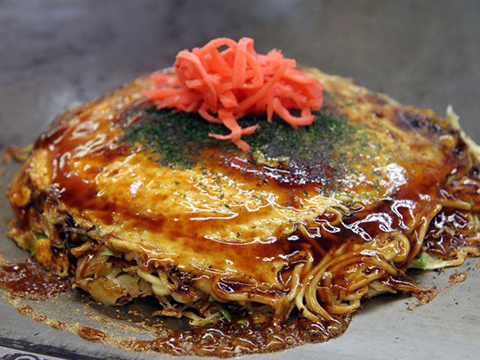
Hiroshima-style Okonomiyaki
広島風お好み焼き
Layered rather than mixed, with noodles and cabbage stacked between batter and egg, distinct from the Osaka style.
Regions / 地方
Chūgoku 中国
山陰山陽
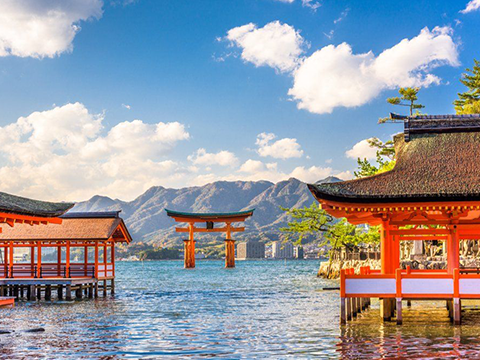
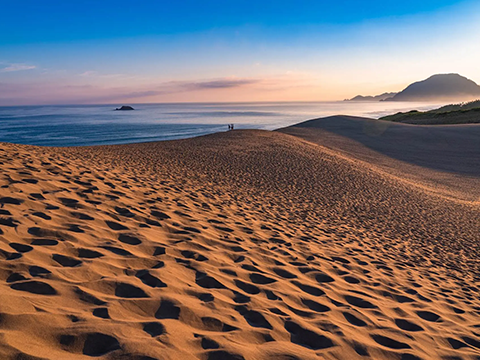
Peace memorials, sacred torii gates, and a mythological coastline where Japan's gods first walked.
中国
Capital
Hiroshima 広島
Area
31,921 km²
Climate
Mild Seto-Inland climate · Sea-of-Japan side snowy in winter · Pacific side dry
Best season
Apr (sakura at Miyajima) · Oct–Nov (foliage)
Overview 概要
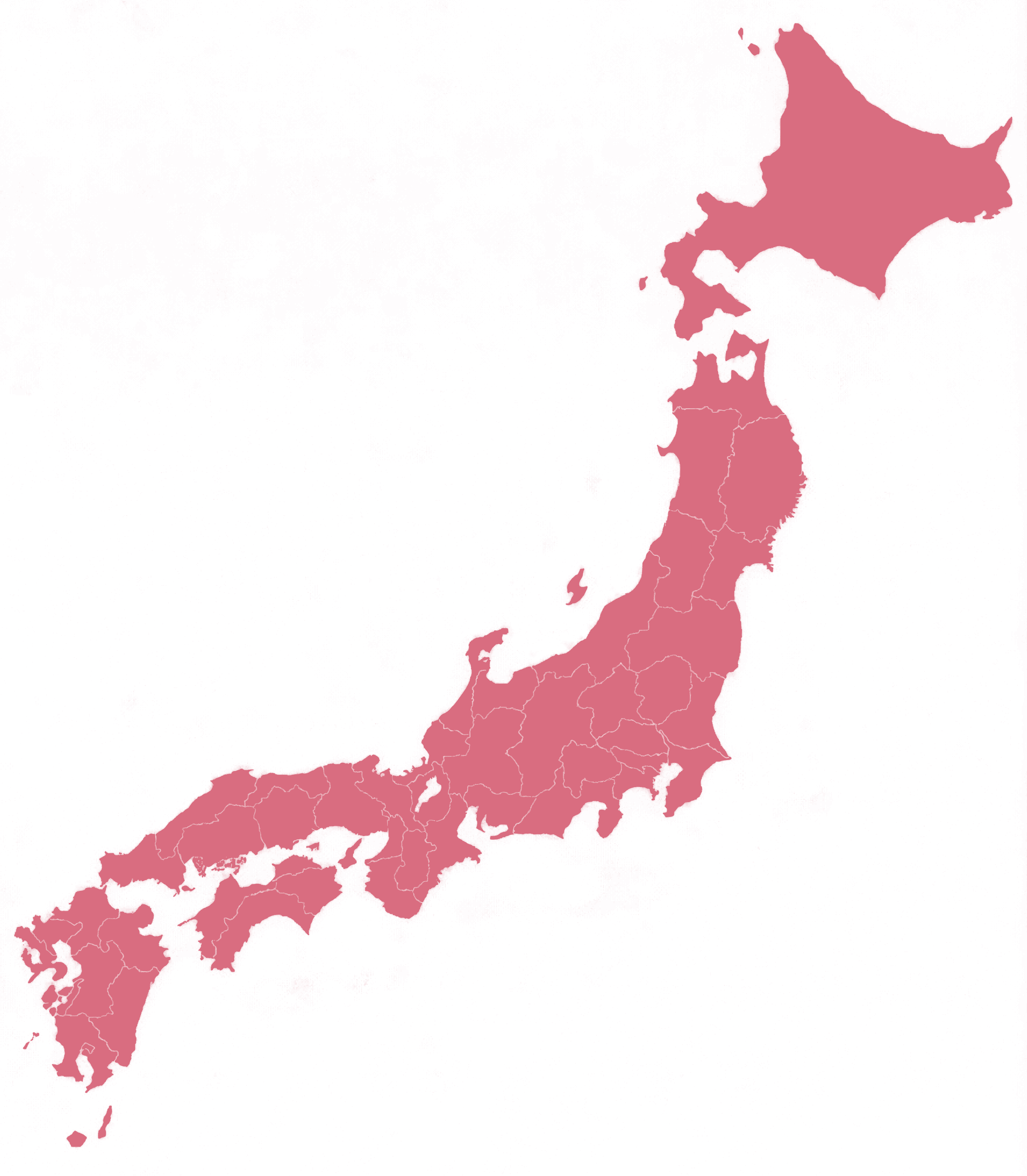
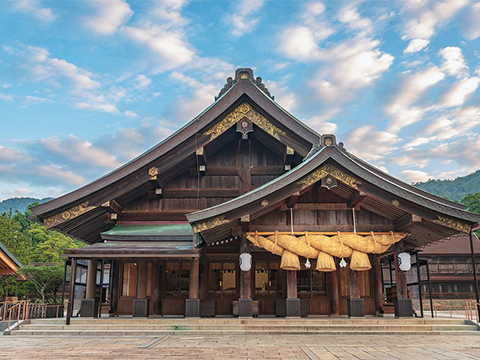
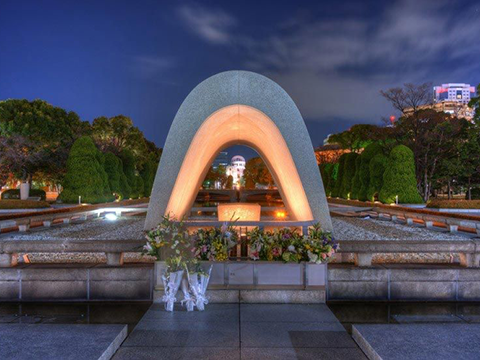
Chūgoku occupies Japan's western tip, split between a rugged San'in coast facing the Sea of Japan and a milder San'yō coast facing the Inland Sea — the region's alternate name, "Sanin-Sanyo," reflects this divide. Hiroshima, the region's largest city, was devastated by the atomic bomb in 1945 and rebuilt as a global center for peace education, anchored by the Peace Memorial Park. Just offshore, Miyajima Island holds the "floating" torii gate of Itsukushima Shrine, one of Japan's most photographed sights. Inland and along the San'in coast, Chūgoku is steeped in mythology — Izumo Taisha, one of Japan's oldest and most important shrines, is said to be where Japan's gods gather each autumn.
Must-see highlights 見どころ
Interactive — drag, click a photo, or press ←→ Space to let it wander on its own, Enter to enlarge, S to hear the name, 1–9 to jump
Regional cuisine 郷土料理
01
Hiroshima-style Okonomiyaki
広島風お好み焼き
Layered rather than mixed, with noodles and cabbage stacked between batter and egg, distinct from the Osaka style.
 02
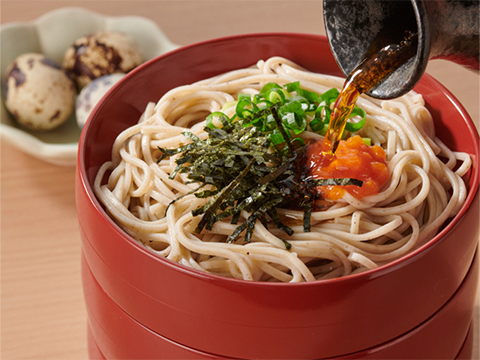
Izumo Soba
出雲そば
Dark, nutty buckwheat noodles served in stacked lacquered trays, a San'in specialty.
 03
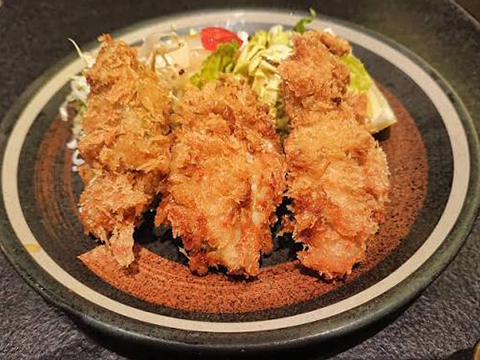
Kaki (Oysters)
牡蠣
Hiroshima Prefecture produces roughly half of Japan's oysters, grilled, fried, or raw.
 04
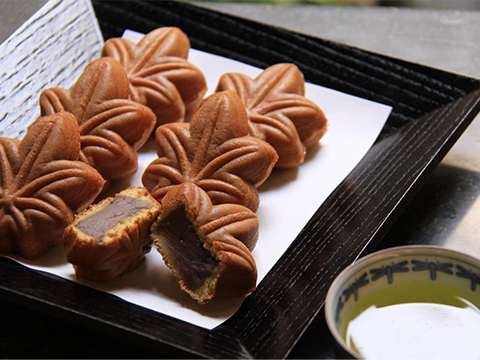
Momiji Manju
もみじ饅頭
Maple-leaf-shaped cakes filled with sweet bean paste, a Miyajima souvenir staple.
 05
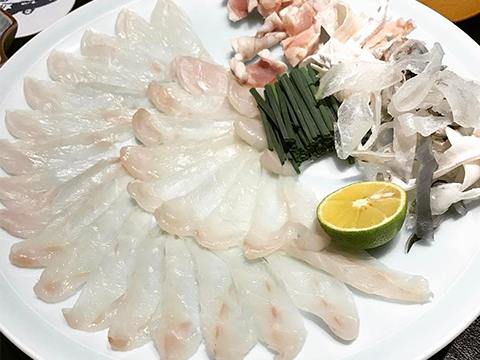
Fugu (Pufferfish)
ふぐ
Shimonoseki, at Chūgoku's western tip, is Japan's top fugu market and a center for the delicacy.
 06
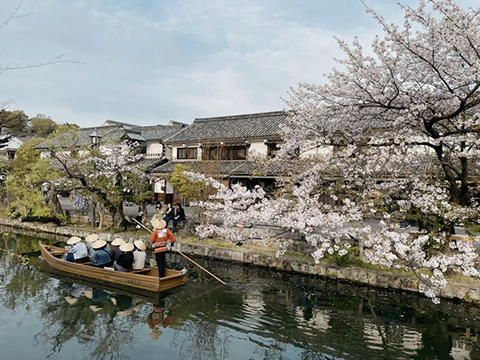
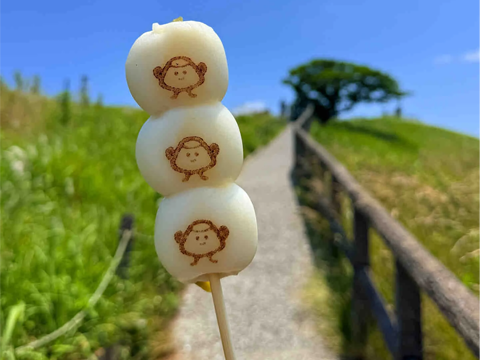
Okayama's Kibi Dango
きび団子
Millet dumplings tied to the local legend of Momotarō (Peach Boy).
Festivals & events 祭り
01
Peace Memorial Ceremony
平和記念式典
August 6 — Hiroshima's annual ceremony commemorating the atomic bombing, with lanterns floated down the river at dusk
02
Kurayoshi Utsubuki Matsuri
打吹まつり
Early August — a lively summer dance festival in the Tottori castle town of Kurayoshi
03
Izumo Taisha Kamiari Festival
神在祭
November (lunar calendar) — marks the month when Shinto gods are believed to gather at Izumo Taisha from across Japan
04
Miyajima Water Fireworks
みやじま水中花火大会
Late August — fireworks launched over the sea near the floating torii gate
冬 / Fuyu
12月–2月
December to February
Split in two: the San'in coast gets real snow and Daisen turns into a ski mountain, while the Seto side stays mild and sunny. Miyajima is blissfully quiet outside New Year.
夏 / Natsu
7月–8月
July and August
The calm Inland Sea is made for island-hopping and evening fireworks over Hiroshima's river deltas. Days are hot and sticky, but a sea breeze off the Seto softens the coast.
Let's play 中国で遊ぼう
8 rounds — Chūgoku food, places and festivals, every round with a photo. Press Start, then answer in English. Listen with the speaker button any time.
ROUND
1/08
SCORE
0
STREAK
0
TIME
15
First run
雪

Getting there アクセス
Hiroshima is Chūgoku's main hub, about 4 hours from Tokyo and under 1.5 hours from Osaka on the San'yō Shinkansen. From Hiroshima, Miyajima is a short train-and-ferry combination, while the San'in coast (Izumo, Tottori, Matsue) is less connected by rail and often easier to explore by car or limited express train. Hiroshima Airport offers some domestic and limited international flights, though most travelers arrive via Osaka or Tokyo and continue by Shinkansen.