 01
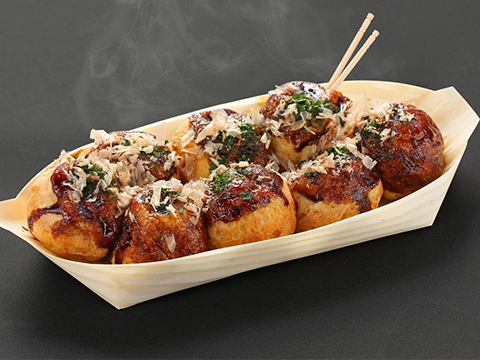
Takoyaki
たこ焼き
Osaka's octopus-filled batter balls, grilled crisp outside and molten inside, topped with sauce and bonito flakes.
Regions / 地方
Kansai 関西
千年の都
A thousand years as Japan's capital — temples, geisha alleys, and the country's best street food.
関西
Capital
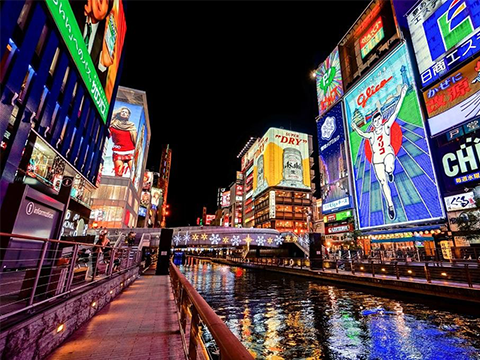
Osaka 大阪
Area
27,361 km²
Climate
Mild Pacific climate · humid summers · mild winters
Best season
Mar–Apr (sakura) · Nov (autumn temples)
Overview 概要
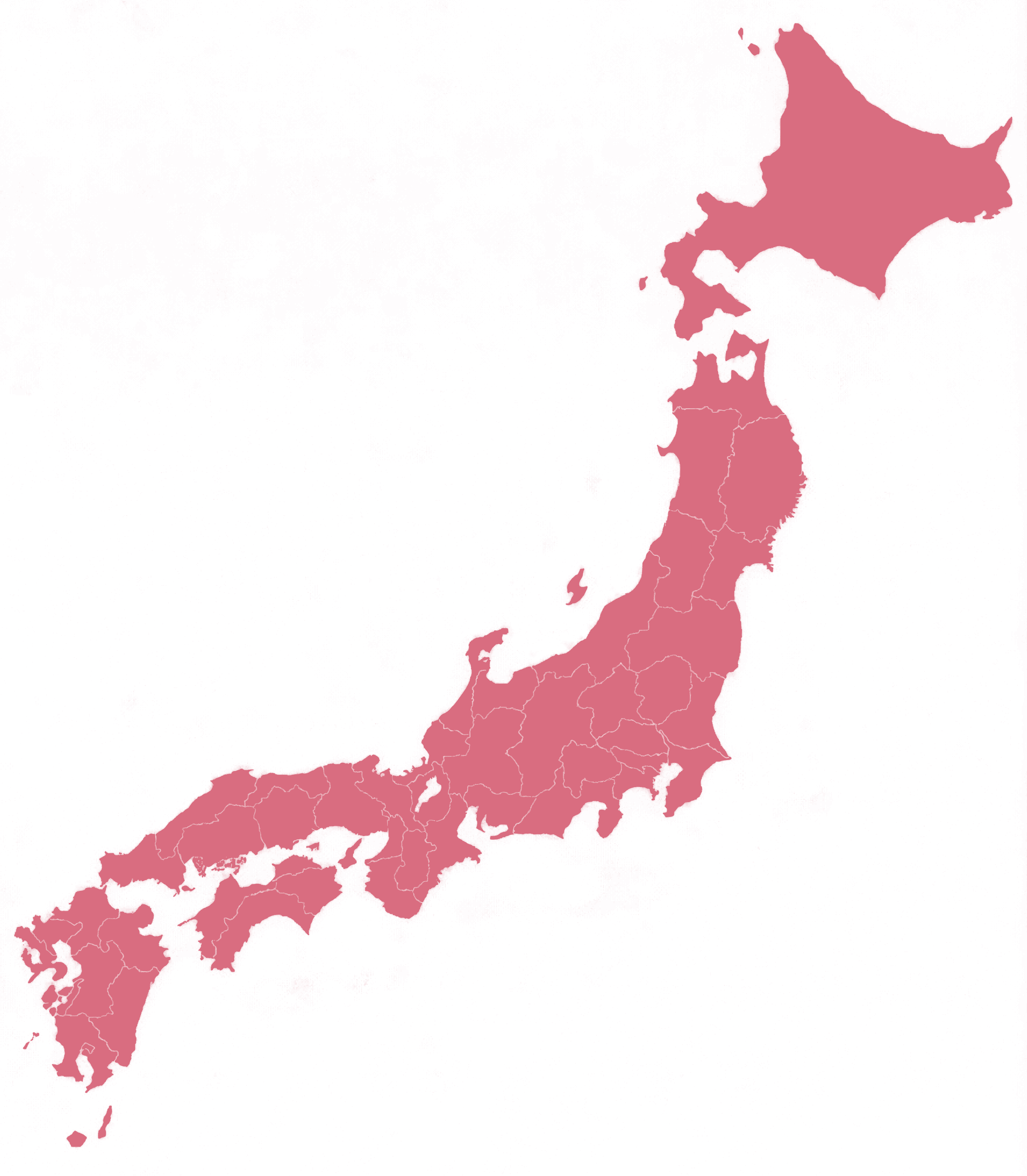
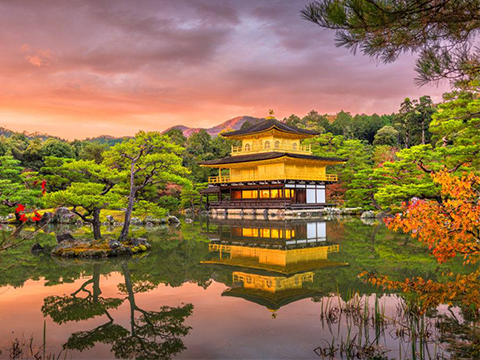
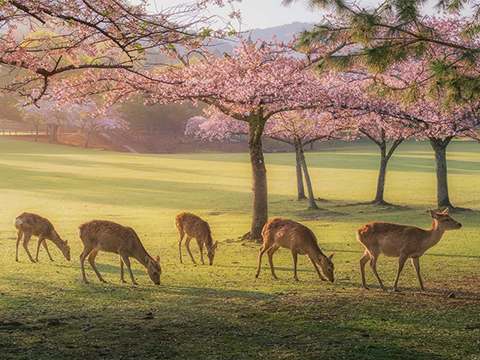
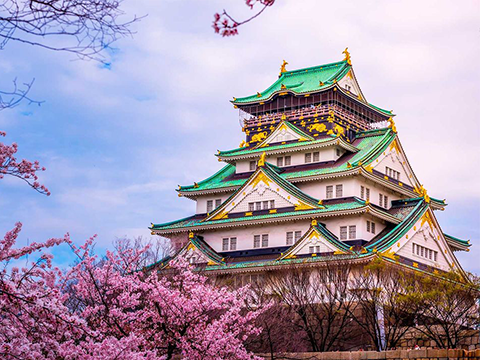
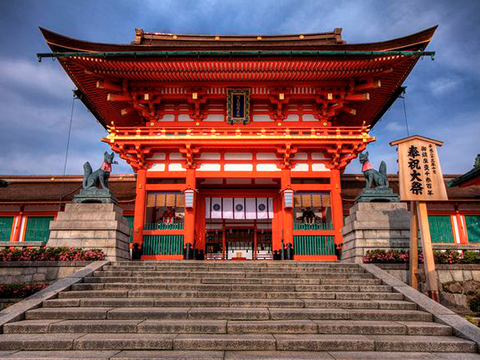
Kansai (also called Kinki) was the political and cultural center of Japan for over a millennium, and it still feels like the country's spiritual heart. Kyoto, the imperial capital for over 1,000 years until 1868, holds thousands of temples and shrines and one of the world's best-preserved geisha districts, Gion. Osaka, by contrast, is brash, food-obsessed, and famously the birthplace of takoyaki and okonomiyaki — its unofficial motto, kuidaore ("eat until you drop"), says it all. Nara, Japan's capital before Kyoto, is home to free-roaming sacred deer and some of the country's oldest wooden buildings. Together the region packs classical Japan — temples, castles, and centuries of court culture — into a compact, easy-to-travel area.
Must-see highlights 見どころ
Interactive — drag, click a photo, or press ←→ Space to let it wander on its own, Enter to enlarge, S to hear the name, 1–9 to jump
Regional cuisine 郷土料理
01
Takoyaki
たこ焼き
Osaka's octopus-filled batter balls, grilled crisp outside and molten inside, topped with sauce and bonito flakes.
 02
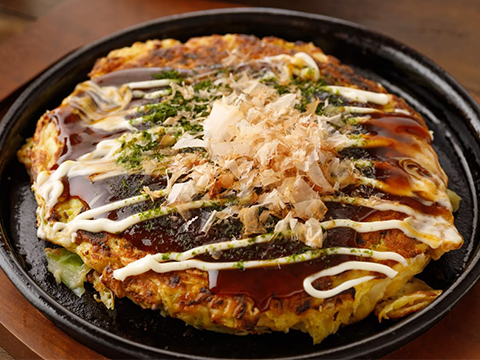
Okonomiyaki
お好み焼き
A savory grilled pancake of batter, cabbage, and toppings, associated with both Osaka and Hiroshima styles.
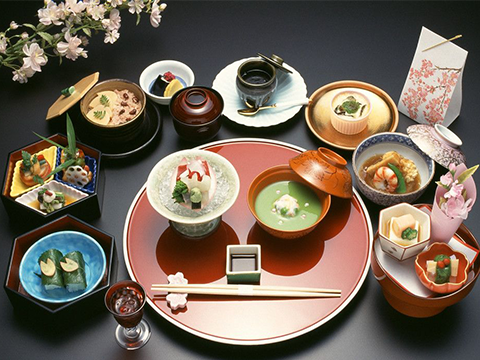 03
Kyoto Kaiseki
京懐石
Kyoto's refined multi-course haute cuisine, rooted in tea-ceremony traditions and seasonal ingredients.
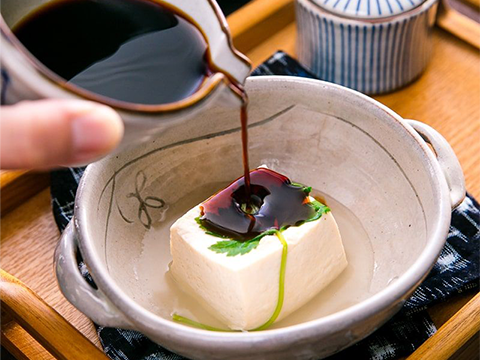 04
Yudofu
湯豆腐
Simmered tofu hot pot, a Kyoto specialty tied to the city's temple and Buddhist vegetarian cooking traditions.
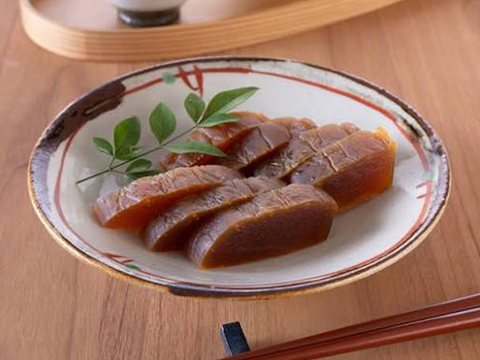 05
Nara-zuke
奈良漬け
Vegetables pickled in sake lees, a Nara specialty dating back over a thousand years.
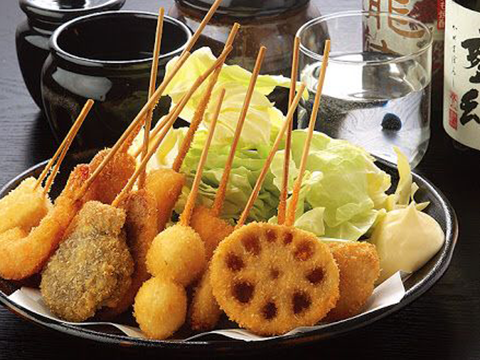 06
Kushikatsu
串カツ
Osaka's breaded, deep-fried skewers, traditionally eaten with a strict "no double-dipping" sauce rule.
Festivals & events 祭り
01
Gion Matsuri
祇園祭
Throughout July — one of Japan's most famous festivals, centered on Kyoto's Yasaka Shrine, with massive wooden float processions
02
Tenjin Matsuri
天神祭
Late July — one of Japan's three great festivals, held in Osaka with a river procession and huge fireworks display
03
Jidai Matsuri
時代祭
October 22 — Kyoto's "Festival of Ages," a costumed procession spanning 1,000+ years of Japanese history
04
Nara Lantern Festival
なら燈花会
Early–mid August — roughly 20,000 candles lit throughout Nara Park and its temples in the evening
冬 / Fuyu
12月–2月
December to February
Short, dry and cold but rarely harsh — and the quietest season at Kyoto's temples. A rare dusting of snow on Kinkaku-ji draws queues before the gates even open.
夏 / Natsu
6月–8月
June to August
Steamy, but this is festival heartland: Gion Matsuri fills Kyoto through July, and five bonfires stamp out the Gozan no Okuribi on August 16. Shaded river kawadoko dining is the local escape.
Let's play 関西で遊ぼう
8 rounds — Kansai food, places and festivals, every round with a photo. Press Start, then answer in English. Listen with the speaker button any time.
ROUND
1/08
SCORE
0
STREAK
0
TIME
15
First run
雪

Getting there アクセス
Osaka and Kyoto are Kansai's main hubs, connected to Tokyo by the Tōkaidō Shinkansen in about 2.5 hours, and to each other in under 15 minutes. Kansai International Airport (KIX) is the region's main international gateway, located on an artificial island in Osaka Bay. Kyoto, Osaka, and Nara are close enough together (all within roughly an hour of each other by train) that most visitors base themselves in one city and day-trip to the others without needing a car — Kansai has one of the most convenient rail networks in Japan for this kind of regional hopping.